
Studio light
Graphite space, a warm key and a cool rim. Keep the surface readable and the background quiet.
Open it.
Understand it.
A quiet studio. A carefully separated object. Follow the materials, the connections and the decisions inside something familiar.
Watch the complete filmsComplete 1080p masters. The page language changes; both films keep their English voice and captions.
02 / THE VISUAL LANGUAGE
The object does the explaining. Light finds its edges. Space reveals how it fits. A line points to exactly what matters.
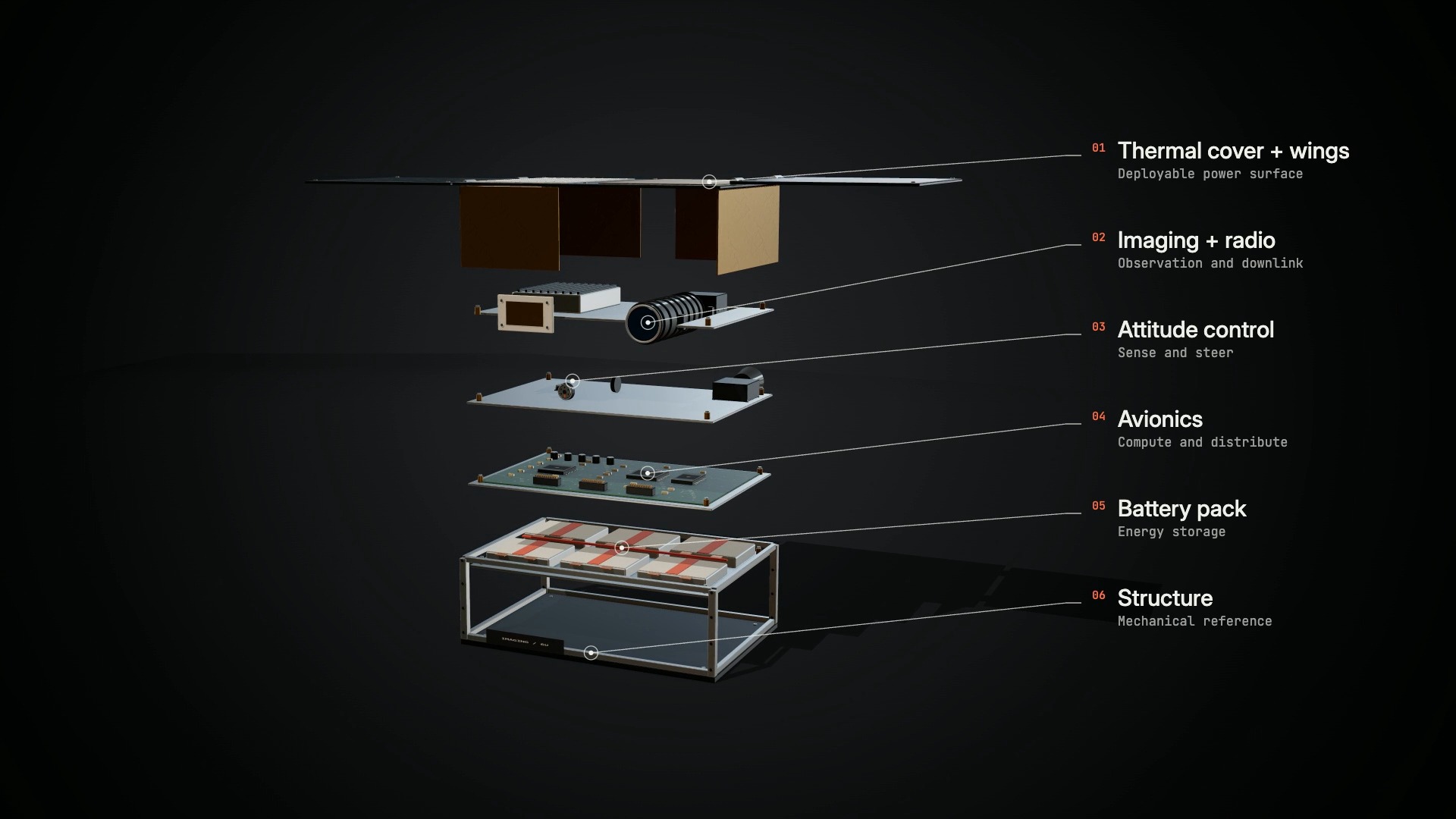
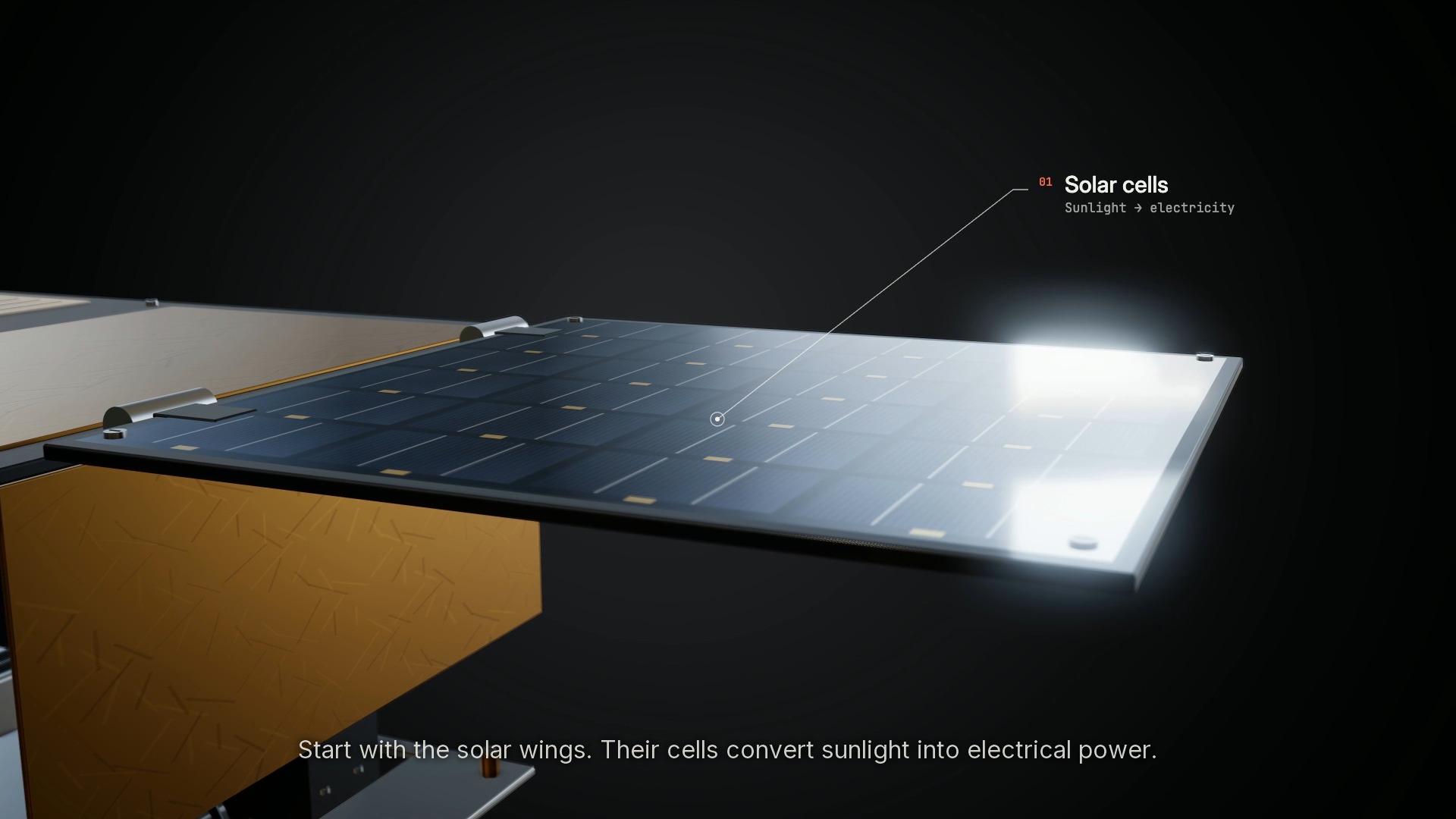
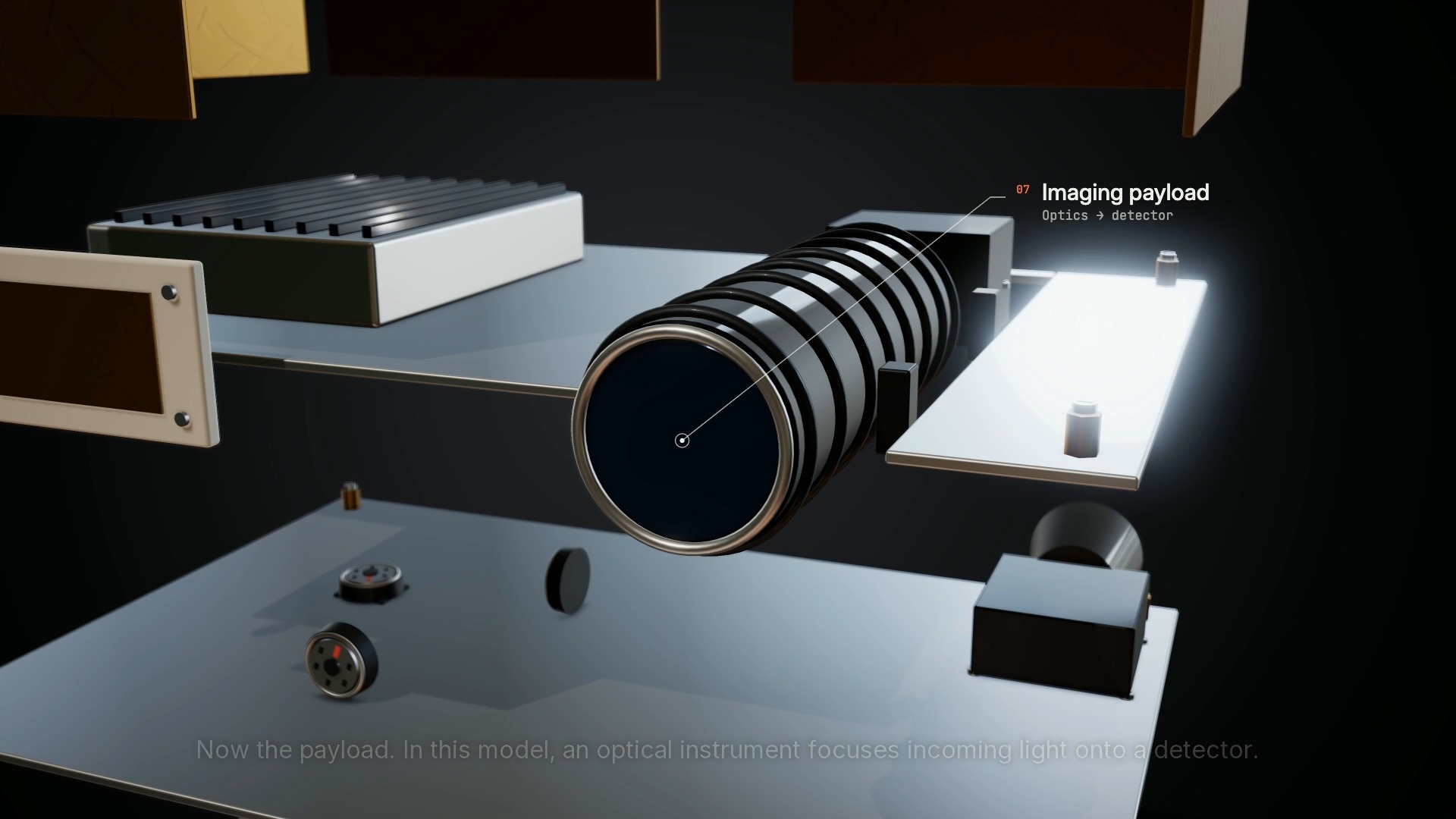
Graphite space, a warm key and a cool rim. Keep the surface readable and the background quiet.
Metal catches the light. Polymer softens it. Circuit boards and optics keep their own texture.
Lift the layers in a staggered wave. Keep the assembly axis clear. Let every moving part settle.
Move from the whole to the interface, then return. Check the entire path around the geometry.
Fine leaders, warm-white type and small orange indices. Labels stay attached to the idea they explain.
Narration, captions, motion and mechanical sound agree on when a change happens.
03 / MAKE IT YOURS
Bring a subject you want to understand. Ask your Agent to research the object, build its geometry, choreograph the camera and produce the film.
Get Codex Film Studio ↗Use Exploded Teardown to make a [duration] film about [object] for [audience], with narration and captions in [language]. Create the project, prepare the environment, produce the film, inspect it and deliver the MP4, editable source and actual review scope.
“Open a camera lens. Explain how focus and aperture work. Use English narration, a dark studio and close material views. Keep illustrative parts clearly identified.”
04 / INSIDE THE STUDIO
A reusable visual method begins with evidence and ends with an inspected film. Each new subject needs its own model and story.
Collect reliable dimensions and construction sources. Record what is measured and what is illustrative.
Build the functional layers, material response, camera route and projected callouts on one timeline.
Write a clear explanation. Align English speech and captions, then mix mechanical cues and a restrained score.
Decode the finished MP4. Inspect consecutive frames, native details and transitions. Review sound separately.
The library includes a style guide and empty production inputs. New subjects need an authored renderer. A finished MP4 is not an editable source bundle.
05 / THE REFERENCE
Exploded Teardown takes its visual inspiration from “21 Keys, Opened” by Lemomo / LemoLab, in lemo-opuscar. The original shows how light, separation and precise annotation can make an object readable.
Upstream code: MIT. Original demonstration film: CC BY 4.0. Each adaptation retains its own source and license credits.
lemo-opuscar ↗